How to Improve Your Rhythm on the Piano
One of the most important skills every pianist can develop is a strong sense of rhythm. While many students focus on playing the correct notes, rhythm is what brings music to life. A beautiful melody played with poor timing can sound confusing, while a simple piece played with steady rhythm can sound polished and musical.
If you have ever struggled to keep a steady beat or found yourself rushing through difficult passages, don't worry. Rhythm is a skill that can be developed with consistent practice. Here are some effective ways to improve your rhythm on the piano.
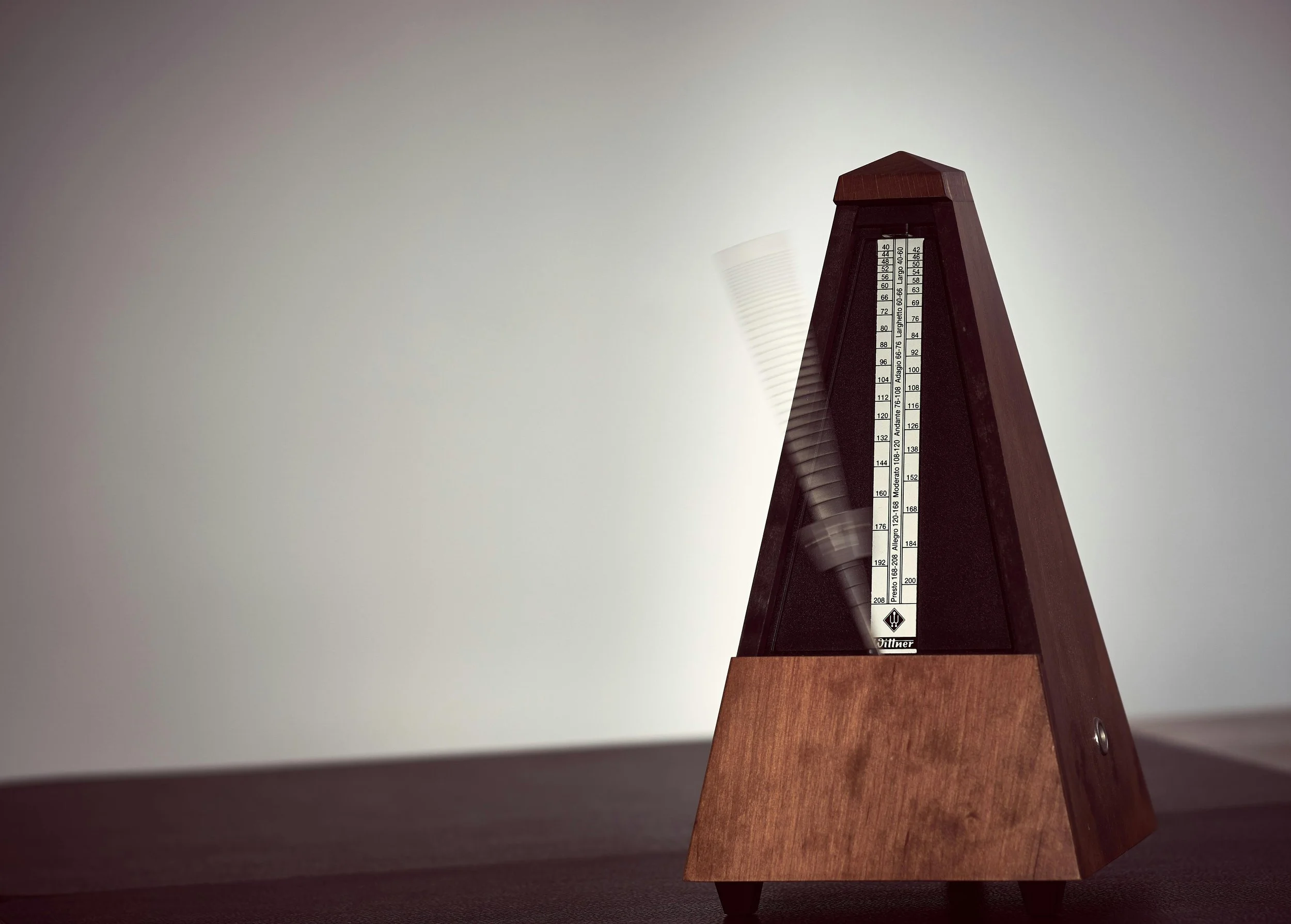
1. Practice with a Metronome
A metronome is one of the best tools for developing rhythmic accuracy. It provides a steady pulse that helps you maintain consistent timing while you play.
Start by setting the metronome to a slow tempo and focus on matching each beat precisely. Once you feel comfortable, gradually increase the speed. Remember that accuracy is more important than speed. Practicing slowly and correctly will build a stronger rhythmic foundation than rushing through a piece.
2. Count Aloud While Playing
Many piano students avoid counting because it can feel confusing at first. However, counting aloud helps you understand how notes fit within the beat.
For example, in 4/4 time, count ‘1, 2, 3, 4’ as you play. When dealing with shorter note values, use subdivisions such as ‘1 and 2 and 3 and 4…’
This reinforces the relationship between rhythm and pulse, making it easier to stay in time.
3. Clap Rhythms Before Playing
Before attempting a new piece, try clapping the rhythm separately from the notes. This allows you to focus entirely on timing without worrying about finger placement or reading pitches.
Clapping rhythms can help identify difficult sections and improve your understanding of rhythmic patterns. Once the rhythm feels comfortable, transfer it to the piano.
4. Listen Actively to Music
Listening is a powerful learning tool. When you hear music, pay attention to the beat, tempo, and rhythmic patterns.
Try tapping your foot or clapping along with recordings. This helps strengthen your internal sense of pulse and develops rhythmic awareness naturally over time.
5. Break Difficult Passages into Smaller Sections
Complex rhythms can feel overwhelming when approached all at once. Instead, divide challenging passages into smaller segments.
Practice each section slowly until the rhythm feels secure. Then gradually combine the sections. This method prevents mistakes from becoming habits and builds confidence.
6. Use Movement to Feel the Beat
Rhythm is not just something you hear, it's something you feel. Swaying gently, tapping your foot, or conducting with your hand can help you internalise the beat.
Many professional musicians use physical movement to connect with the pulse of the music. Don't be afraid to move naturally while practising.
7. Be Patient and Consistent
Like any musical skill, rhythmic accuracy takes time to develop. Daily practice, even for a few minutes, can produce significant improvements over time.
Focus on steady progress rather than perfection. Celebrate small victories and trust the process.
Strong rhythm is the foundation of confident piano playing. By using tools such as a metronome, counting aloud, clapping rhythms, and listening actively, you can steadily improve your timing and musicality. With patience and consistent practice, you'll find yourself playing with greater confidence, precision, and expression.